
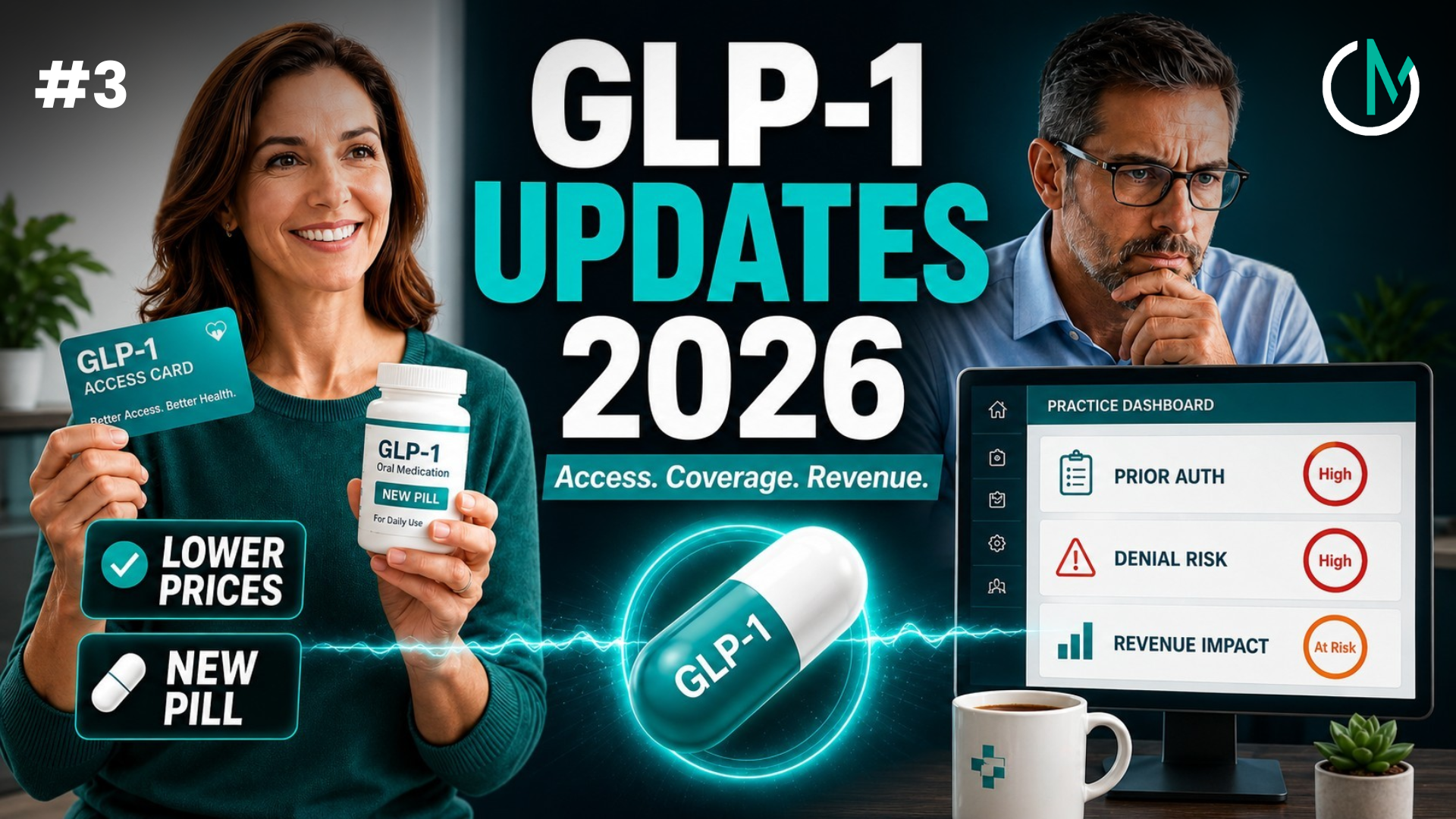
For years, GLP-1 medications meant one thing to most people: expensive injections for weight loss that insurance would not cover. That picture has changed significantly in 2026. Medicare is covering these drugs for weight management for the first time. A daily pill is now available. And prices have dropped to levels that were unthinkable two years ago.
Here is a clear breakdown of what changed, what it means for patients, and what practice owners need to do about it.
What GLP-1 Medications Actually Do
GLP-1 is a hormone your body already makes after eating. It tells the pancreas to release insulin, slows digestion, and reduces appetite. GLP-1 medications replicate that signal.
The practical result: better blood sugar control and meaningful weight loss.
These drugs were first approved for type 2 diabetes in 2005. Their applications have expanded significantly since then. Doctors now use them for cardiovascular risk reduction, chronic kidney disease, obstructive sleep apnea, and a liver condition called MASH. Research into effects on neurodegenerative conditions is ongoing.
The brands most people recognize are Ozempic, Wegovy, Rybelsus, Mounjaro, and Zepbound, made by Novo Nordisk and Eli Lilly.
How Big Is This Market?
The scale of GLP-1 adoption in the US is huge. You can go through the figures below to get a fair idea:
- About 1 in 8 US adults has used a GLP-1 drug
- Around 10 million Americans are currently on one, with J.P. Morgan projecting users could reach 25 to 30 million by 2030
- US spending on GLP-1s grew more than 500% between 2018 and 2023
This is no longer a specialty medication. It is a population-level shift affecting federal budgets, insurer decisions, and how chronic disease gets managed.
The Changes to GLP-1 Access in 2026

Medicare Is Now Covering GLP-1s for Weight Loss
Federal law previously blocked Medicare from covering weight-loss drugs. That changed in November 2025 when federal officials reached agreements with Novo Nordisk and Eli Lilly to lower prices and expand access.
The Medicare GLP-1 Bridge runs July 1, 2026, through December 31, 2027.
- Eligible Part D members pay $50 a month for a covered GLP-1 prescribed for weight management
- Claims and prior authorization go through a central processor, not the patient’s regular Part D plan
- The $50 copay does not count toward the Part D deductible or annual out-of-pocket cap
- Patients already on a GLP-1 through Part D for diabetes, cardiovascular risk, sleep apnea, or MASH stay on their existing path
Eligibility depends on BMI thresholds and conditions such as high blood pressure, heart failure, chronic kidney disease, prediabetes, or a history of cardiovascular disease.
Important note:
Coverage is not universal. State Medicaid decisions vary. Pennsylvania dropped weight-loss GLP-1 coverage starting in January 2026. The Bridge is a real step forward with real limits attached.
A longer-term program, the BALANCE Model, launches in 2027. It allows state Medicaid programs and Part D sponsors to cover GLP-1s for weight management under negotiated terms.
There Is Now a GLP-1 Pill
On April 1, 2026, the FDA approved orforglipron (Foundayo) from Eli Lilly. It is the first oral GLP-1 for chronic weight management that comes without the restrictions older oral versions carried.
What makes it different:
- Once daily, any time of day
- No empty stomach requirement
- No waiting period before eating or drinking
- No refrigeration needed
In clinical trials, the highest dose produced an average weight loss of around 11 percent over 72 weeks in adults without diabetes.
Safety note:
It carries a boxed warning for thyroid C-cell tumor risk. It is not appropriate for patients with a personal or family history of medullary thyroid carcinoma or MEN 2. The most common side effects are gastrointestinal.
Removing the injection requirement is a bigger deal than it sounds. Needle aversion and refrigeration kept many eligible patients from starting treatment. That barrier is now gone, which means the patient pool expands again.
Key Takeaways for Patients
- If you are on Medicare, ask your provider whether your BMI and health history meet the eligibility criteria. The $50 monthly copay kicks in July 1, 2026.
- If needle aversion has been a barrier, Foundayo is now an option. Your provider can assess whether it is appropriate for you.
- The shortage that made them a tolerated option has ended. They are not FDA-approved and are generally not covered. Work with a licensed prescriber and a verified pharmacy.
What Does This Mean for Healthcare Providers?
Expanded coverage means more GLP-1 prescriptions flowing through your practice. That means more prior authorizations, more renewals, and more denial management. The billing complexity is not going down.
- Most GLP-1 denials are documentation problems, not coverage problems. Payers want BMI history, step therapy evidence where required, and qualifying comorbidities documented in full. Build a repeatable documentation packet and use it consistently.
- From July 1, 2026, Bridge prescriptions route to a central processor with a specific BIN and PCN, not the patient’s Part D plan. Providers may need to attest to a patient’s BMI at the time therapy began, even if that was years earlier. Set up a process to capture and store that history now.
- The shortage that created legal space for compounded semaglutide is over. The FDA has restricted compounding. Billing compounded formulations to insurers now risks automatic denials and fraud and abuse scrutiny. Audit your billing if this applies to your practice.
- CMS-0057-F, the prior authorization final rule, took effect January 1, 2026. It pushes payers toward faster electronic processing and tighter audit trails. Clean documentation is a compliance requirement, not just a billing preference.
Managing GLP-1 billing in-house is becoming a full-time job. If your practice is buried in prior authorization backlogs, tangled up in Bridge claim routing, or losing revenue to denials you can’t keep up with, OneMed’s billing team is ready to help. We specialize in revenue cycle management, from documentation to claims routing to denial appeals.
Give us a call at (315) 366-8242 or send us a note at partners@onemedbilling.com, and we’ll take it from there.
Sources
The following URLs could not be embedded as anchor text within the content but are referenced for the facts and figures used:
- NPR — Medicare Bridge coverage explainer: https://www.npr.org/2026/05/06/nx-s1-5812662/medicare-bridge-glp1-drugs-copay
- Qualigenix — Prior authorization burden in 2026: https://qualigenix.com/drug-prior-authorization-2026/
- Grand View Research — GLP-1 global market size: https://www.grandviewresearch.com/industry-analysis/glp-1-receptor-agonist-market
- CNBC — GLP-1 effects on food and restaurant demand: https://www.cnbc.com/2026/03/21/glp-1-diets-restaurants-protein-fiber-weight-loss-drugs.html


Leave a Reply